Home / Products / Solar Home & Off-Grid Systems
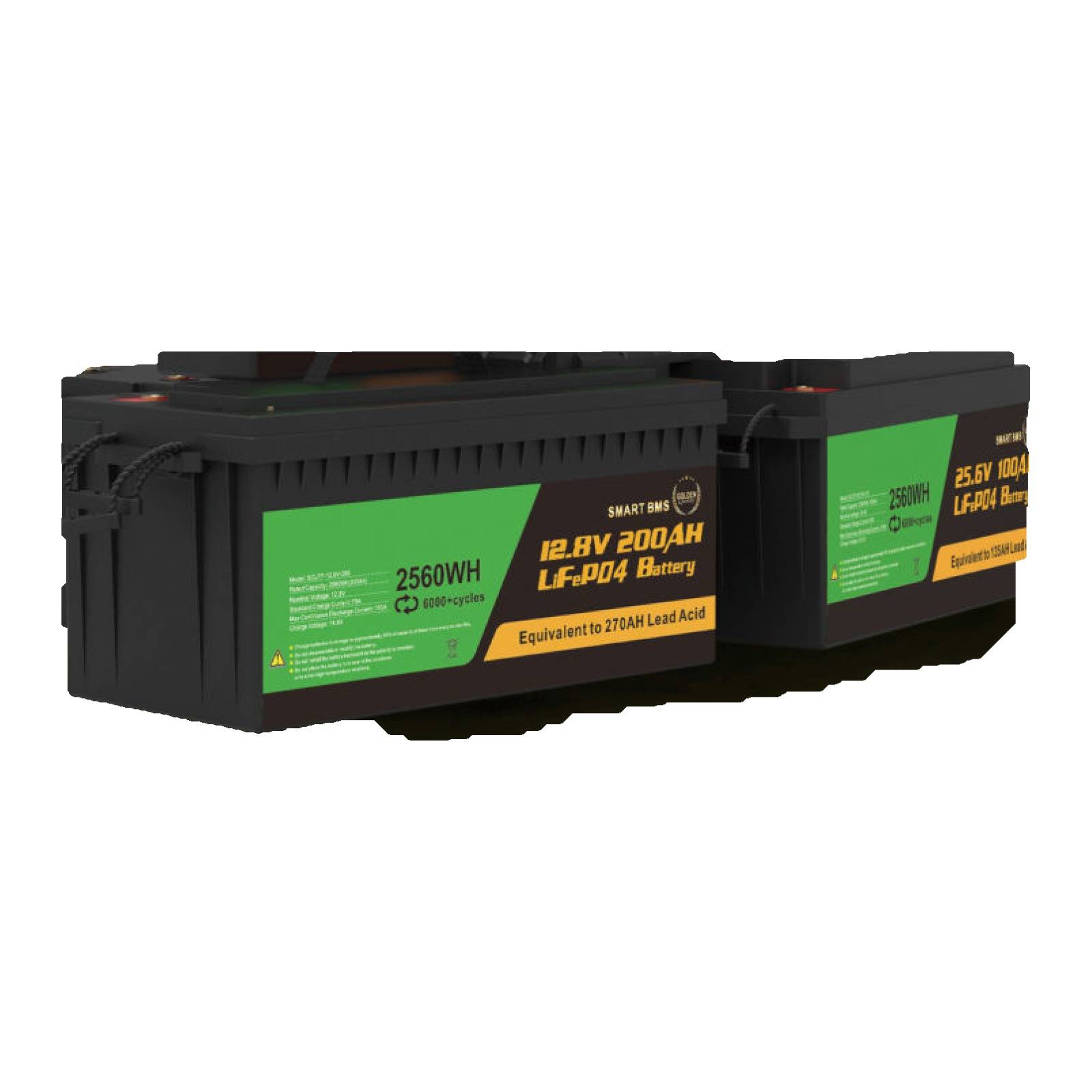
Battery Storage
LiFePO4 Battery — 12.8 V and 25.6 V
Standard-format LiFePO4 blocks from 384 Wh to 5120 Wh in 12.8 V and 25.6 V, with 4S2P to 8S1P cell arrangements, 10-second peak current and a 100 A continuous discharge on the larger models.
- Chemistry: LiFePO4
- Nominal voltage: 12.8 V / 25.6 V
- Capacity: 384 Wh to 5120 Wh
- Cell structure: 4S1P to 8S1P
- Charge voltage: 14.6 V / 29.2 V
- Peak current: 33 A to 220 A, 10 s
Request a quotation for LiFePO4 Battery — 12.8 V and 25.6 V
Quantity, destination port and your contact details are enough for us to price it. Tell us the pole height or road class if you have them.
Standard-format LiFePO4 blocks from 384 Wh to 5120 Wh in 12.8 V and 25.6 V, with 4S2P to 8S1P cell arrangements, 10-second peak current and a 100 A continuous discharge on the larger models.
At a glance
| Models (12.8 V, large) | SCLFP-12.8V-200 · SCLFP-12.8V-300 · SCLFP-25.6V-100 · SCLFP-25.6V-200 |
| Rated capacity | 2560 Wh (200 Ah) · 3840 Wh (300 Ah) · 2560 Wh (100 Ah) · 5120 Wh (200 Ah) |
| Cell combination | 4S2P · 4S1P · 8S1P · 8S1P |
| Discharge current | 100 A · 200 A · 100 A · 100 A |
| Discharge end voltage | 10 V · 10 V · 20 V · 20 V |
| Standard charge voltage | 14.6 V · 14.6 V · 29.2 V · 29.2 V |
| Float voltage | 13.8 V · 13.8 V · 27.6 V · 27.6 V |
| Standard charge current | 50 A · 100 A · 50 A · 50 A |
| Max continuous charge | 100 A · 200 A · 100 A · 100 A |
| Max continuous discharge | 100 A · 200 A · 100 A · 100 A |
| Peak current | 110 A 10 s · 220 A 10 s · 110 A 10 s · 110 A 10 s |
| Dimension | 52.2×24×21.8 cm · 52.2×26.8×22 cm · 52.2×24×21.8 cm · 52.2×24×21.8 cm |
LiFePO4 Battery — 12.8 V and 25.6 V — technical parameters
| Models (12.8 V, large) | SCLFP-12.8V-200 · SCLFP-12.8V-300 · SCLFP-25.6V-100 · SCLFP-25.6V-200 |
| Rated capacity | 2560 Wh (200 Ah) · 3840 Wh (300 Ah) · 2560 Wh (100 Ah) · 5120 Wh (200 Ah) |
| Cell combination | 4S2P · 4S1P · 8S1P · 8S1P |
| Discharge current | 100 A · 200 A · 100 A · 100 A |
| Discharge end voltage | 10 V · 10 V · 20 V · 20 V |
| Standard charge voltage | 14.6 V · 14.6 V · 29.2 V · 29.2 V |
| Float voltage | 13.8 V · 13.8 V · 27.6 V · 27.6 V |
| Standard charge current | 50 A · 100 A · 50 A · 50 A |
| Max continuous charge | 100 A · 200 A · 100 A · 100 A |
| Max continuous discharge | 100 A · 200 A · 100 A · 100 A |
| Peak current | 110 A 10 s · 220 A 10 s · 110 A 10 s · 110 A 10 s |
| Dimension | 52.2×24×21.8 cm · 52.2×26.8×22 cm · 52.2×24×21.8 cm · 52.2×24×21.8 cm |
| Models (12.8 V, small) | SCLFP-12.8V-30 · SCLFP-12.8V-50 · SCLFP-12.8V-100E · SCLFP-12.8V-100 · SCLFP-12.8V-150 |
| Rated capacity | 384 Wh (30 Ah) · 640 Wh (50 Ah) · 1280 Wh (100 Ah) · 1280 Wh (100 Ah) · 1920 Wh (150 Ah) |
| Cell combination | 4S2P · 4S1P · 4S4P · 4S1P · 4S1P |
| Discharge current | 30 A · 50 A · 80 A · 100 A · 100 A |
| Standard charge current | 15 A · 25 A · 40 A · 50 A · 50 A |
| Max continuous charge | 30 A · 50 A · 80 A · 100 A · 100 A |
| Peak current | 33 A 10 s · 55 A 10 s · 110 A 10 s · 110 A 10 s · 110 A 10 s |
| Dimension | 22.3×9.5×17.5 cm · 22.8×13.8×20.8 cm · 33×17.2×21.5 cm · 33×17.2×21.5 cm · 52.2×24×21.8 cm |
| Charge temperature | 0–50 °C |
| Discharge temperature | −20–60 °C |
Tell us the daily load, the backup hours you need and the PV array size and we will confirm the model and the configuration for your project.