Steel High Mast Poles
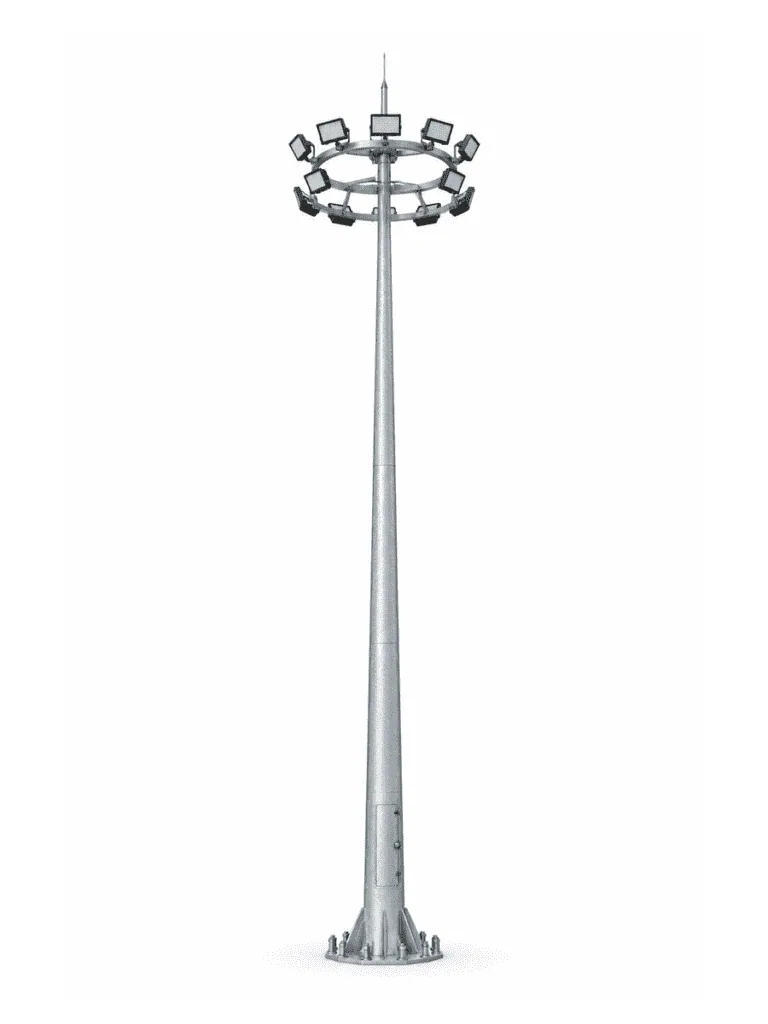
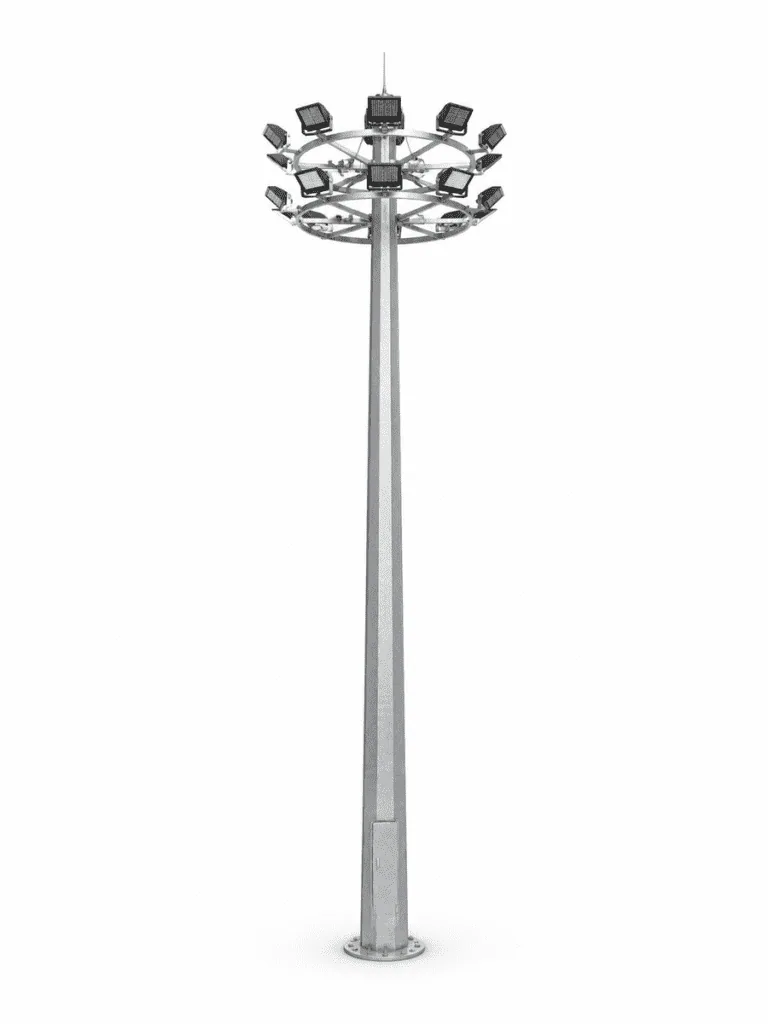
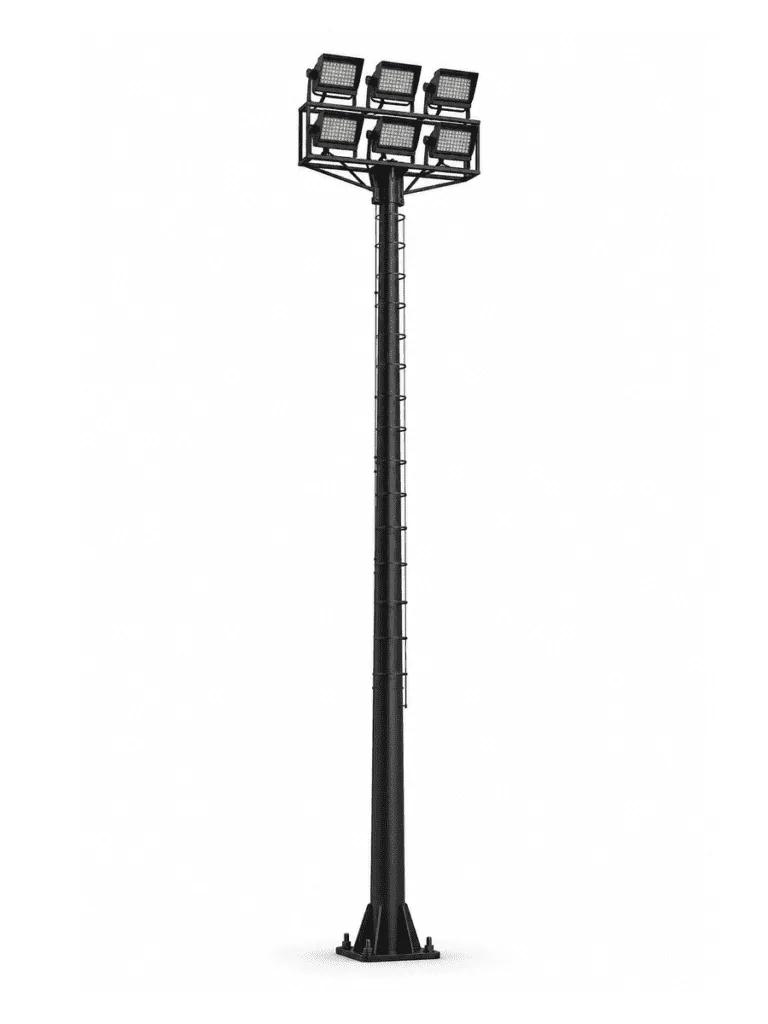
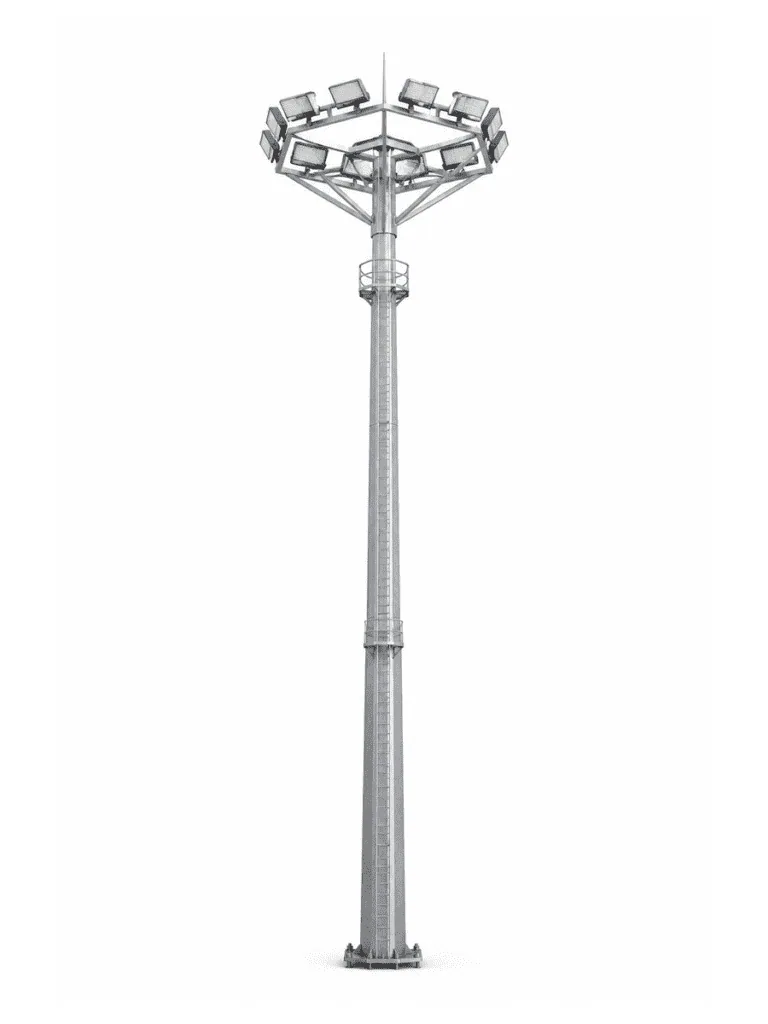
High mast lights from 15 m to 30 m with a fixed, ladder-access or internally lifting crown carrying three to eighteen floodlights, on a single-piece hot-dip galvanised mast for stadiums, ports, freight yards and highways.
11 products
Product models
Choosing the crown before you fix the height
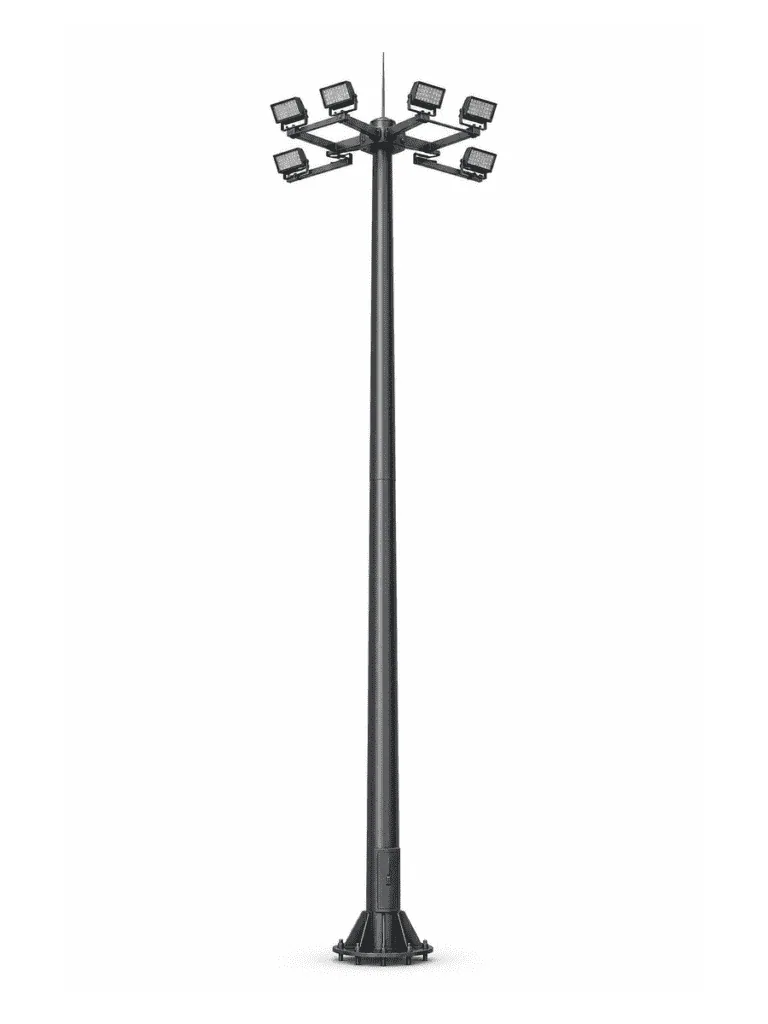
Every high mast on this page is built to order on the same base: a round conical steel pole, hot-dip galvanised, supplied with base plate, anchor bolts, earthing terminal and foundation drawing. The difference is the crown, which decides how many floodlights you can carry and how they are aimed.
| Crown | Floodlights | Crown type |
|---|---|---|
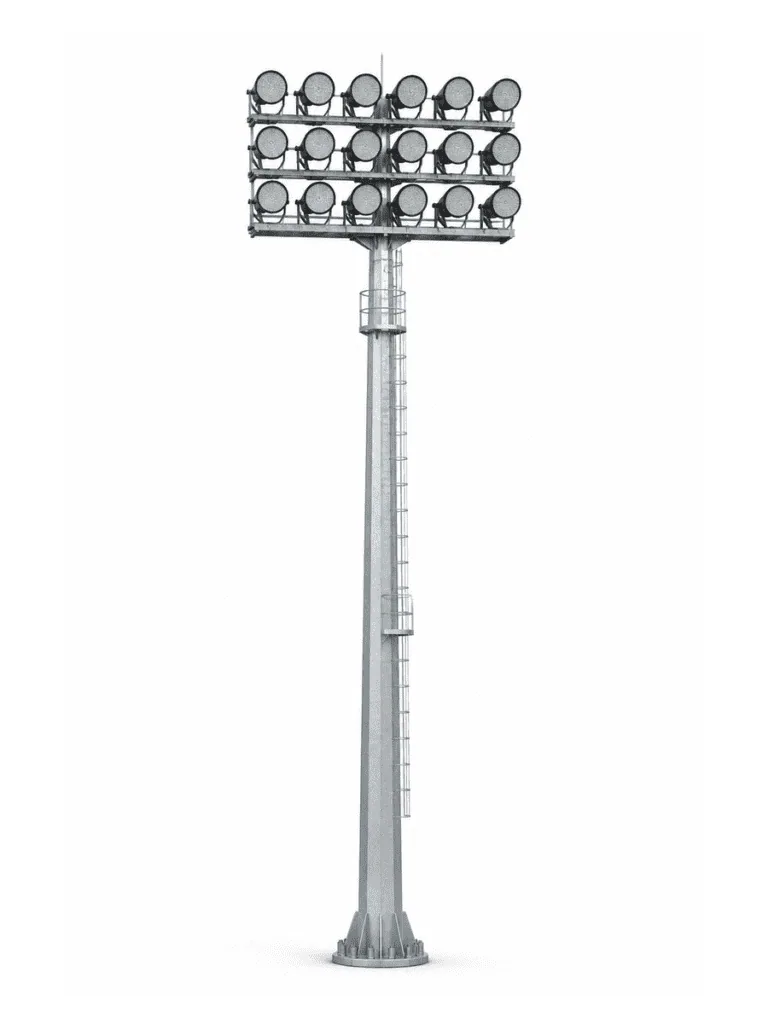
| Super Stadium | 18 | Fixed crown |
| Double Tier | 16 | Fixed crown |
| Lifting | 16 | Internally lifting crown with winch |
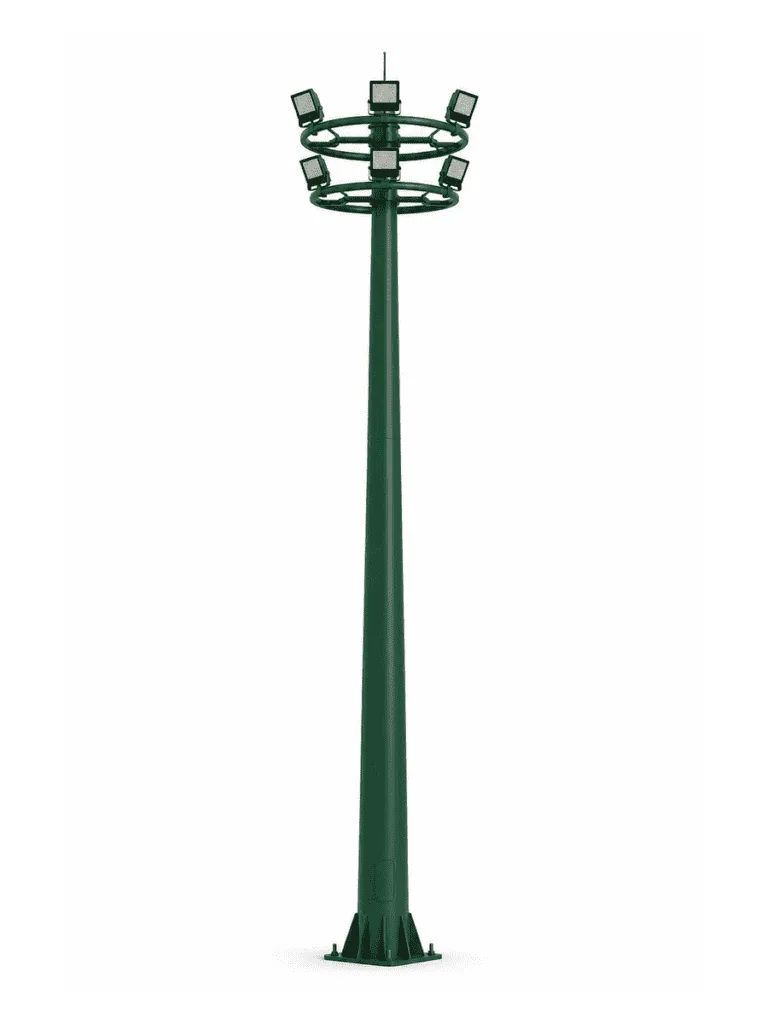
| Double Ring | 12 | Fixed crown |
| Hexagonal | 12 | Fixed crown |
| Polygonal Platform | 12 | Fixed crown |
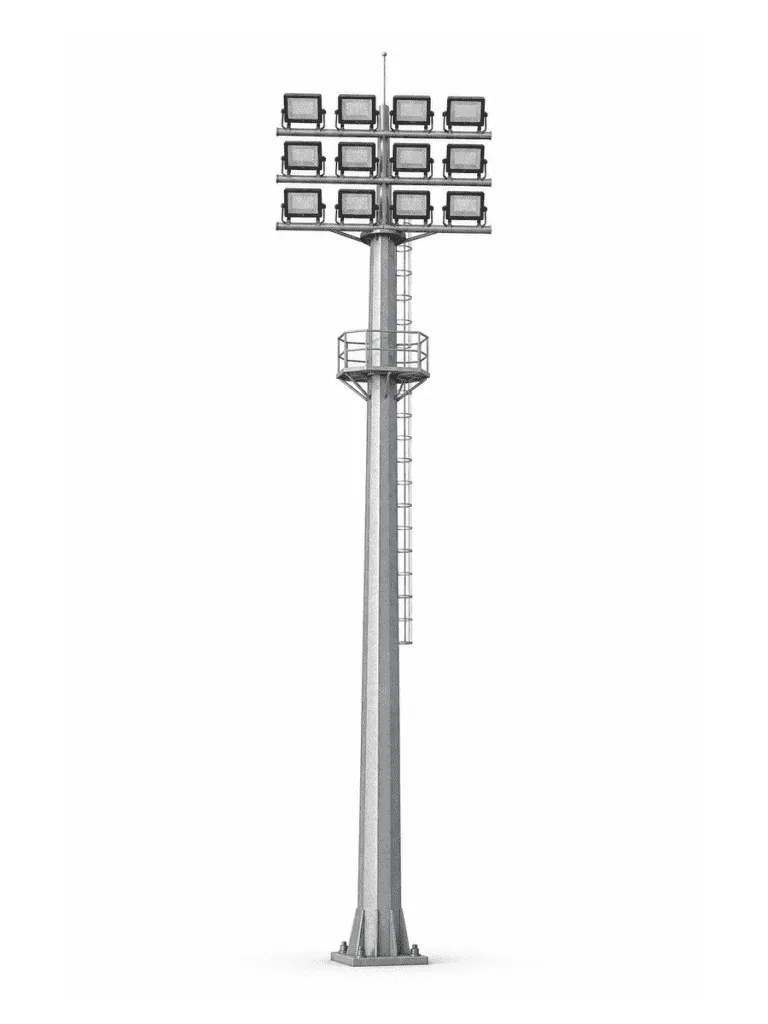
| Stadium Matrix | 12 | Fixed crown |
| Cross Arm | 8 | Fixed crown |
| Ring Crown | 8 | Fixed crown |
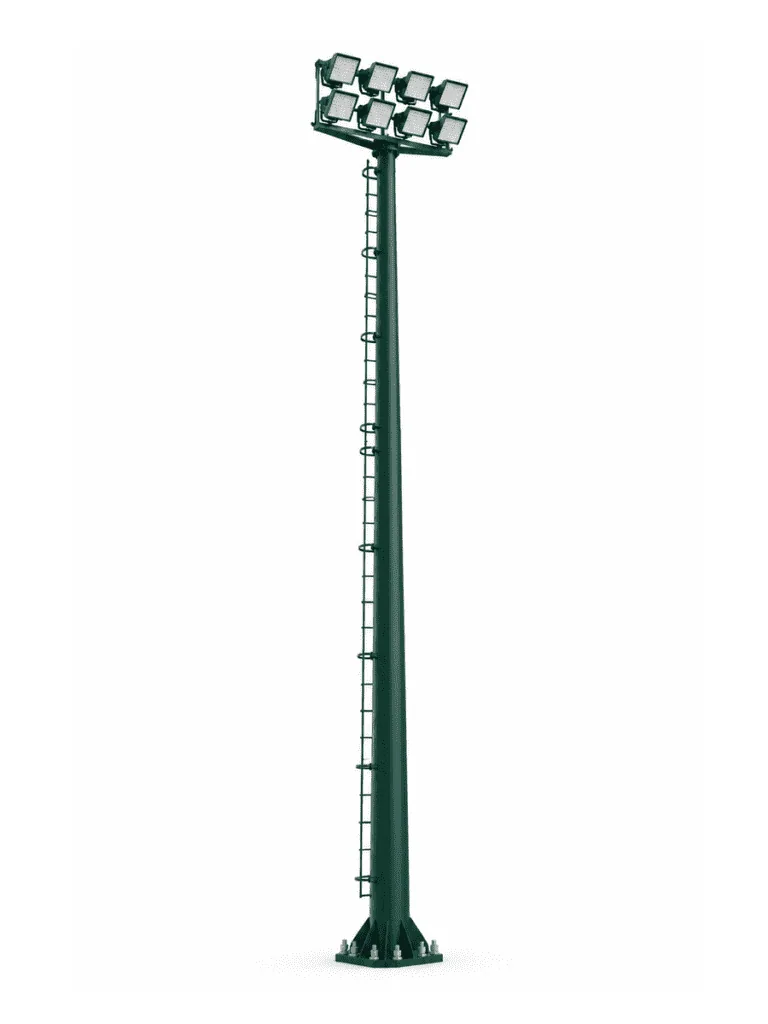
| Single Side | 8 | Fixed crown |
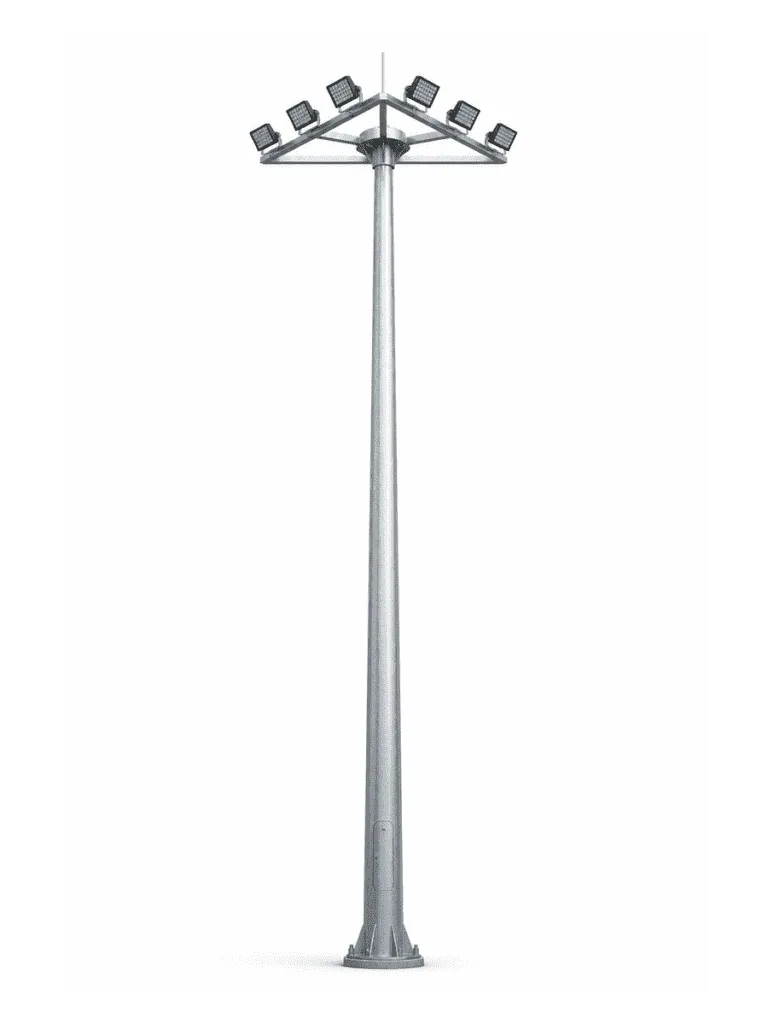
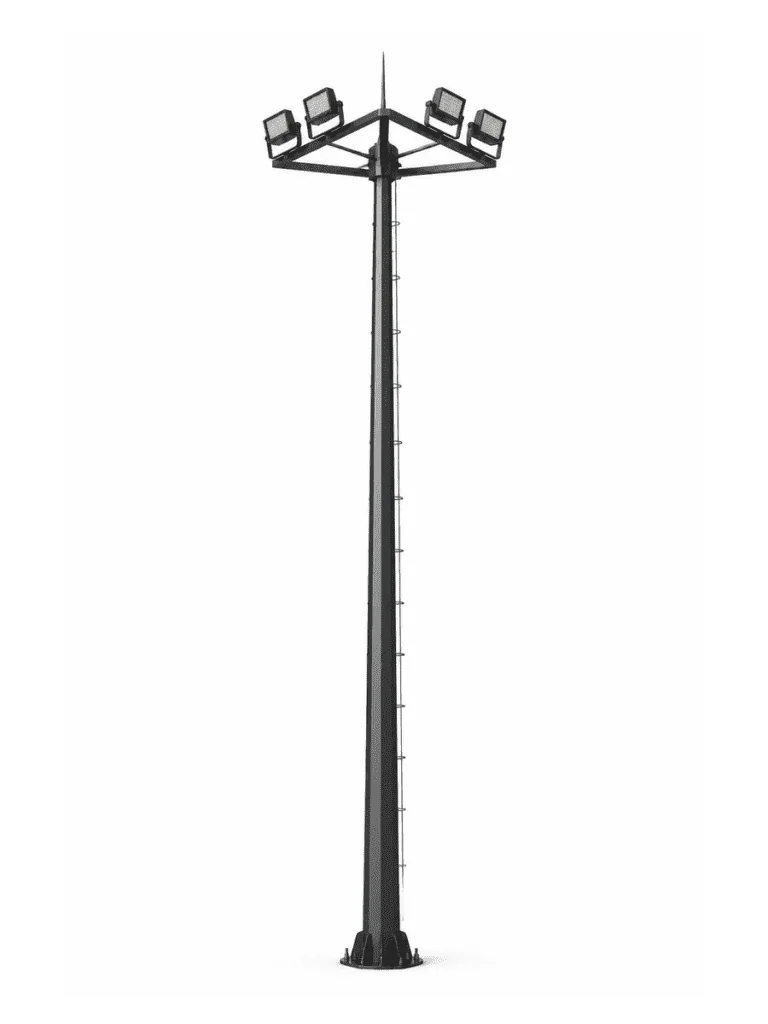
| Triangular | 6 | Fixed crown |
Standard range is 15–30 m for every frame; heights above that, wind-load class and the floodlight power are matched to the project drawing.
High Mast Poles
High mast poles from 15 m to 30 m in Q235 or Q355 steel, hot-dip galvanised and supplied with the base plate, the anchor bolts and the foundation drawing.
A Mast Built Around the Crown
Specifications
High Mast and Floodlight Pole Range
Range: 15 m to 30 m carrying three to eighteen floodlights on a ring, cross, triangular or platform crown frame.
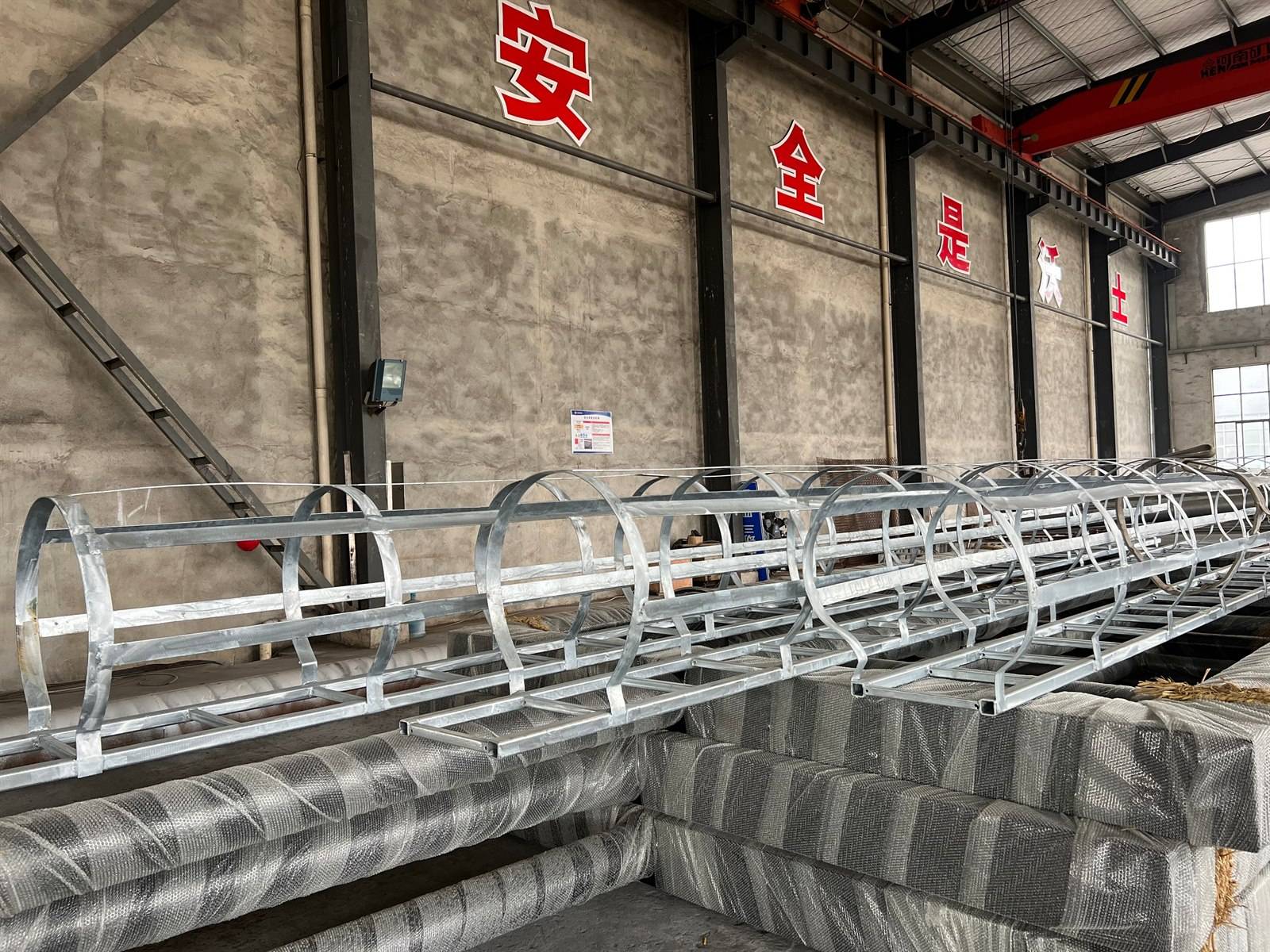
Crown: fixed, ladder-access or internally lifting crown with a winch and a cable guide.
Material: Steel Q235 or Q355, hot-dip galvanised as standard, or galvanised and powder coated to a RAL colour.
Supplied with: Base plate, anchor bolts, earthing terminal, pole door and foundation drawing. Diameter, wall thickness and base plate are confirmed for the wind load and the floodlight load at your site.
Material: Steel Q235, Q235B or Q345, hot-dip galvanised as standard, or galvanised and powder coated to a RAL colour.
Supplied with: Base plate, anchor bolts, earthing terminal, pole door and foundation drawing. Pole diameter, wall thickness and base plate are confirmed for the wind load and the floodlight load at your site.
Material and Tolerances
Material: Steel Q235, Q235B, Q345
| Property | Tolerance |
|---|---|
| External diameter | ±1% |
| Shape | ±3% of the diameter |
| Thickness | ±10% |
| Straightening | ±0.3% of total length |
| Length | ±0.5% |
Where High Mast Lights Are Used
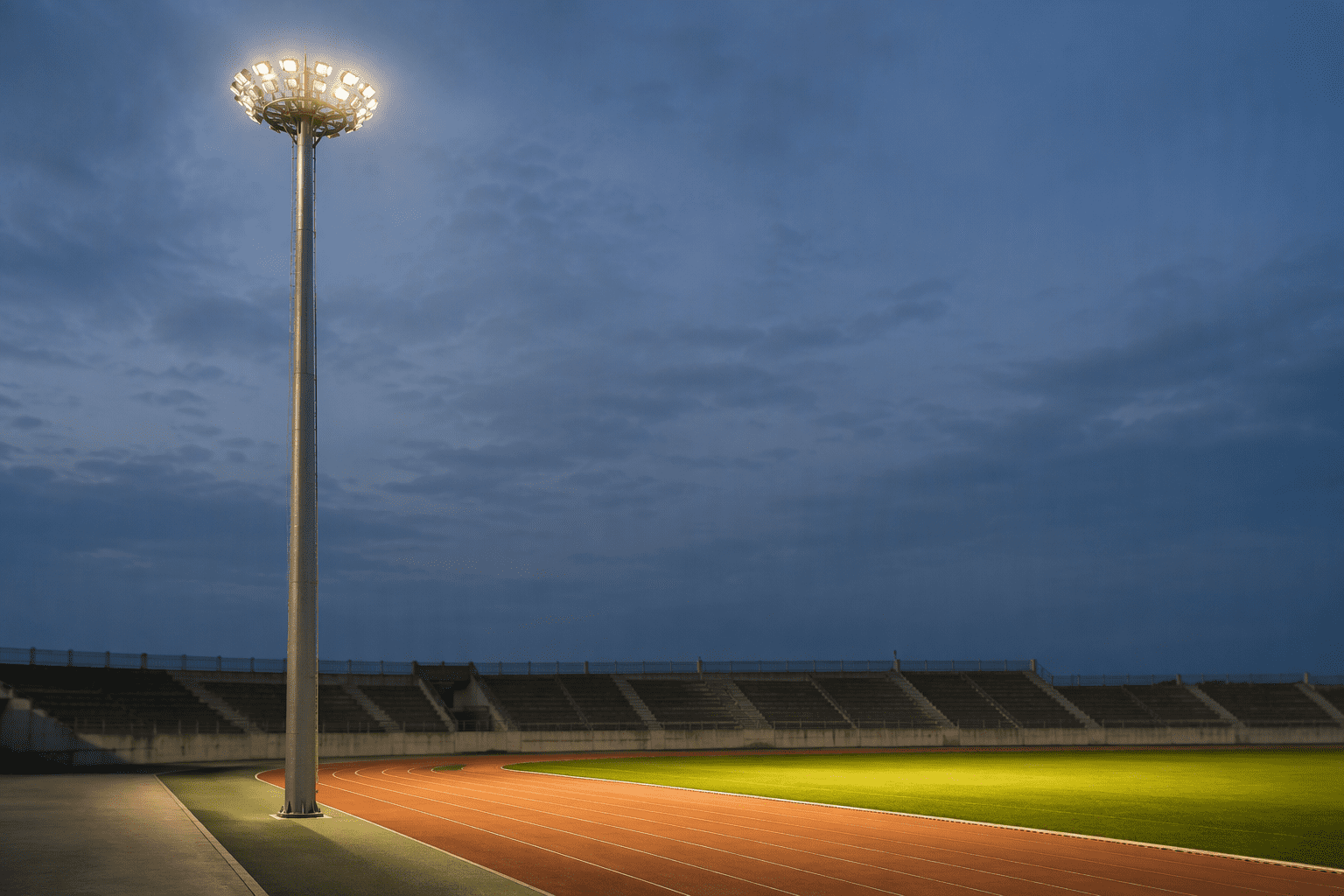
Stadiums and Sports Grounds
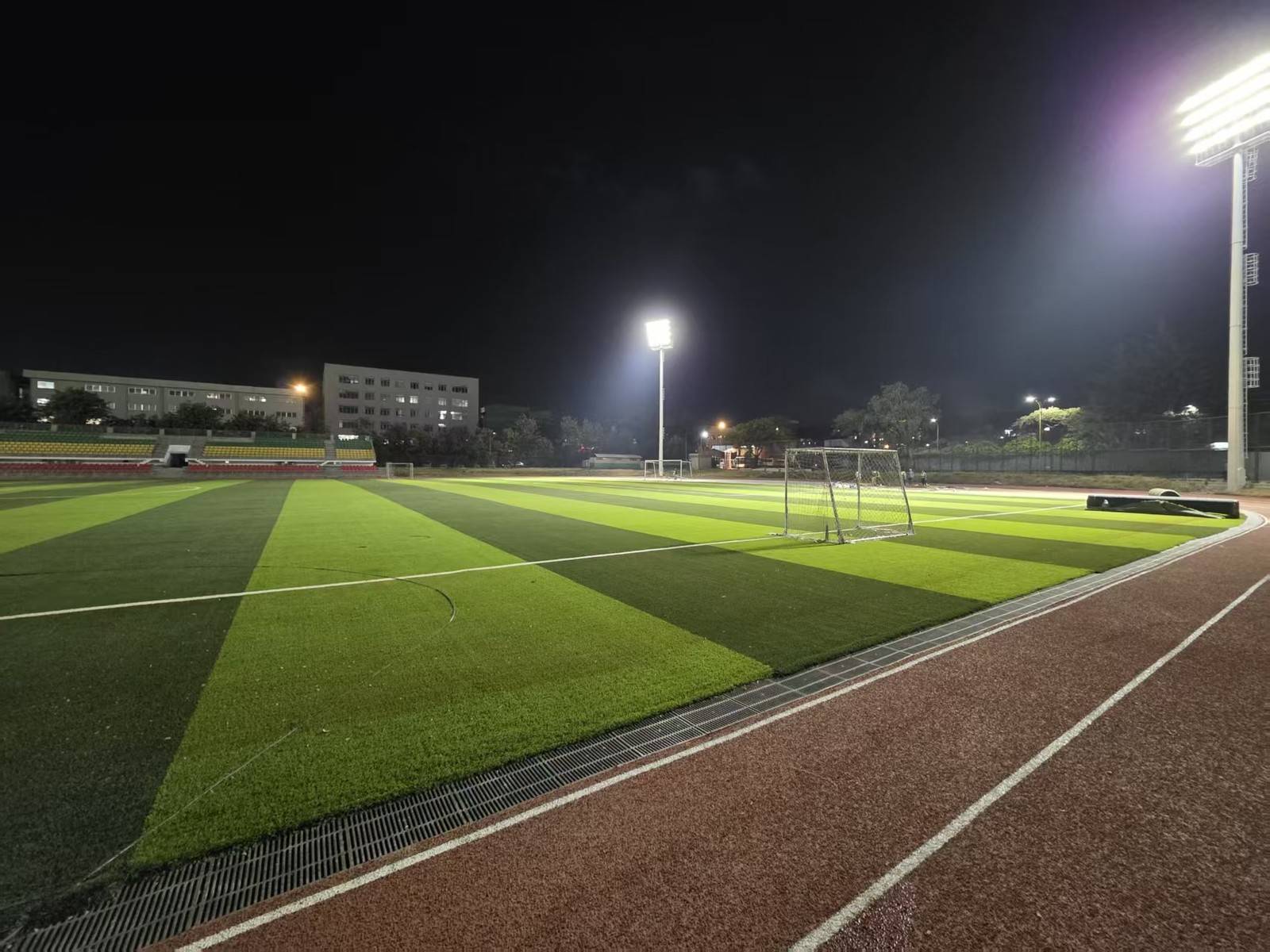
A single 20 m to 30 m mast with a ring crown lights the whole pitch or track from one foundation, with no pole inside the playing area.
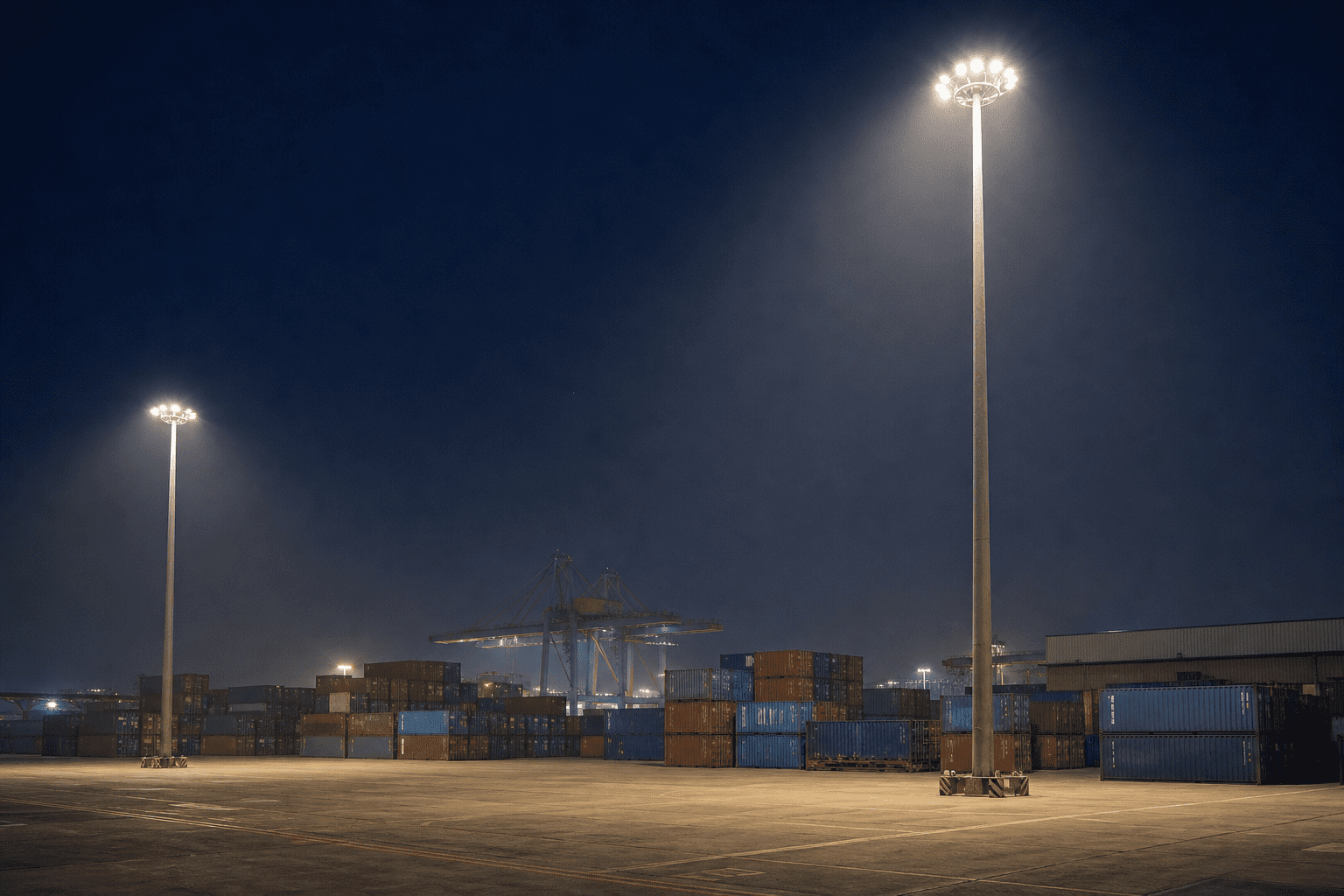
Ports and Freight Yards
Lifting and ladder-access crowns carry up to eighteen floodlights over container yards, with the winch or the access door kept at working height.
Construction Details
Base Plate & Flange
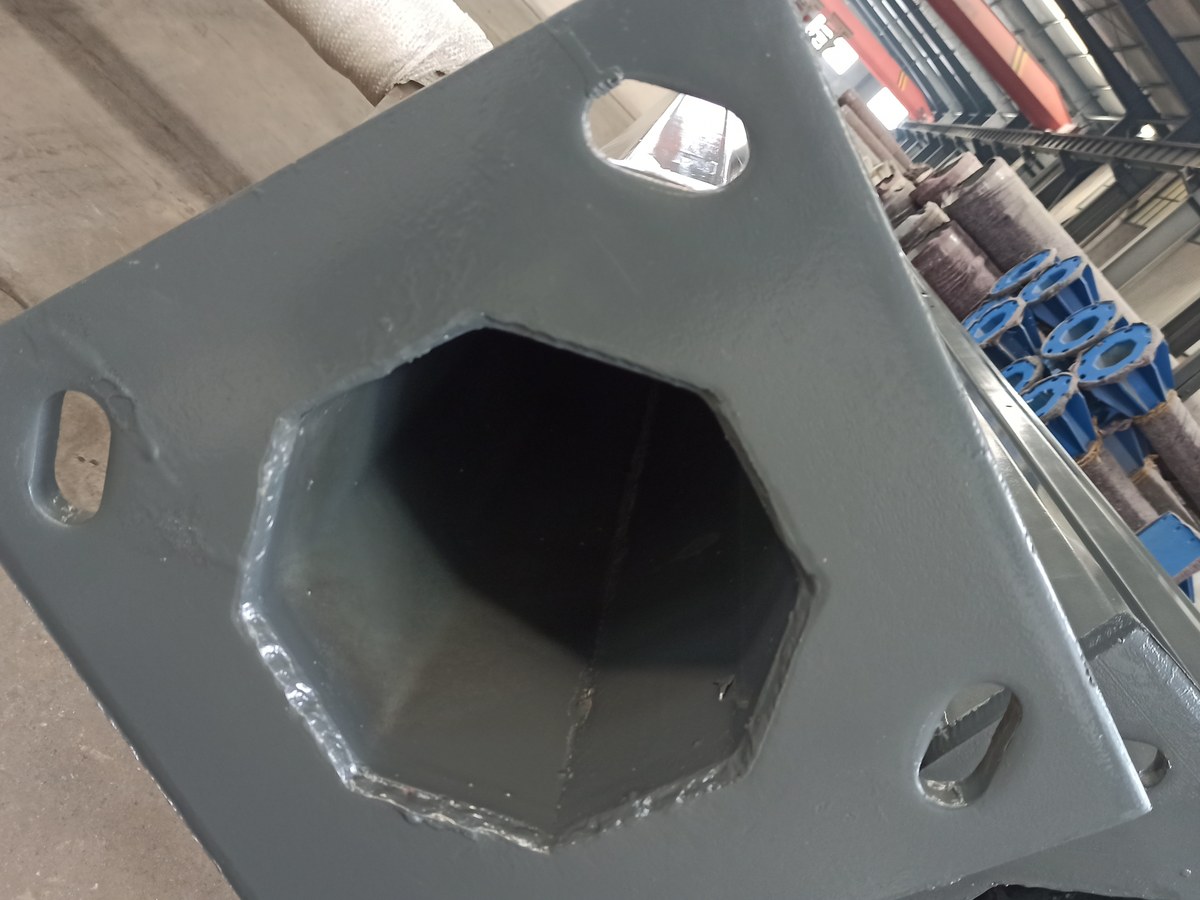
A square base plate is welded to the pole root and drilled for the anchor bolts, with the weld dressed and the whole assembly galvanised.
Finish & Galvanising
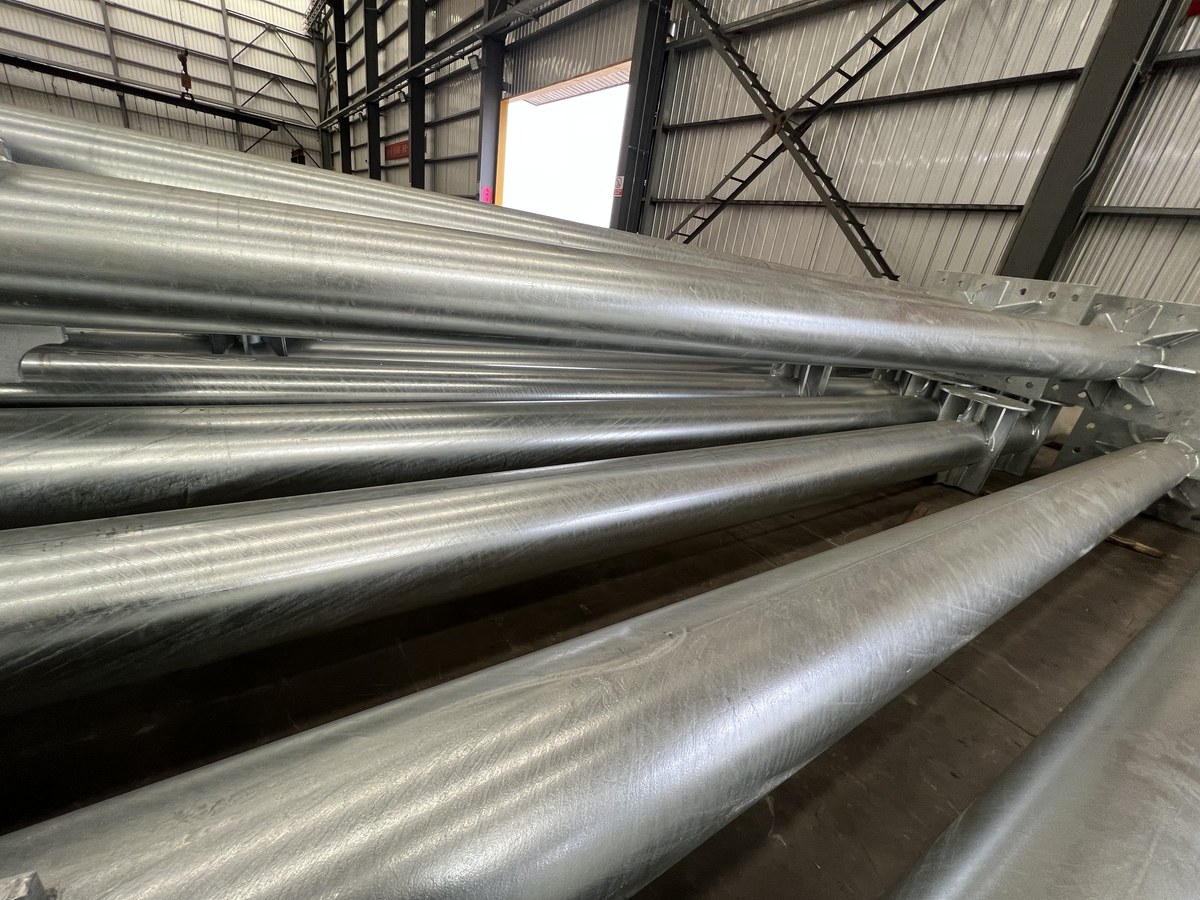
Hot-dip galvanised as standard, or galvanised and powder coated to a RAL colour when the specification calls for it.
Crown & Luminaire Brackets
How a high mast is specified
A high mast is defined by height, lifting method and crown, in that order. Changing any one of them changes the section and the foundation.
- Height — our standard range is 15 m to 30 m; heights below and above that are produced to the project drawing.
- Lifting method — fixed crown, ladder-access crown, or internally lifting crown with a winch and cable guide. Internally lifting is usual where the mast stands inside a live traffic area and a maintenance visit would need lane closure.
- Crown frame — ring, cross, triangular or platform, carrying three to eighteen floodlights. The frame is detailed around the luminaire footprint, not the other way round.
- Finish — hot-dip galvanised as standard, or galvanised and powder coated to a RAL colour for urban schemes.
- Foundation — base plate, anchor bolts and the foundation drawing are issued with the pole so civil and steel work match.
Where high masts are used
Highway interchanges, port and terminal yards, stadium approach and parking areas, large industrial sites, and border or toll plazas where a small number of tall points is preferred to many short ones.
What we need to quote
Height, number of floodlights and their mounting pattern, lifting method, and the wind load for the site. With those four we confirm section, wall thickness, crown frame and base plate, and issue the drawing with the quotation. We supply from our partner factories and coordinate galvanising and dimensional inspection before shipment.
Crown frame options
Thirteen crown frames are produced. The frame is chosen from the number of floodlights and how they should be arranged around the mast top.
| Crown frame | Floodlights carried |
|---|---|
| Ring Crown | 4 / 6 / 8 / 10 |
| Ring Crown, ladder access | 4 |
| Double Ring | 12 |
| Triangular | 3 / 6 / 9 |
| Single Side | 4 / 6 / 8 |
| Cross Arm | 8 |
| Hexagonal | 6 / 12 / 18 |
| Stadium Matrix | 6 / 12 |
| Super Stadium | 18 |
| Polygonal Platform | 12 |
| Double Tier | 8 / 16 |
| Lifting | 16 |
| Lifting Ring | 8 |
Putting a high mast specification together
- Height — within the 15 m to 30 m range, or to the project drawing outside it.
- Crown frame — from the table above, matched to the floodlight count and aiming pattern.
- Lifting method — fixed, ladder access, or internally lifting with winch and cable guide.
- Finish and foundation — hot-dip galvanised as standard or RAL powder coated; base plate, anchor bolts and foundation drawing issued with the mast.
For example, an interchange mast might be specified as 20 m height, ring crown carrying 8 floodlights, ladder-access crown, hot-dip galvanised, with the anchor bolt set and foundation drawing supplied against the site wind load.
Get a Quotation for Your Project
Technical guides
Read before you specify
Practical notes on the decisions that decide whether a high mast poles package works on site, written for the people who sign the BOQ.